

Former Denver Broncos Seek Concussion Relief Through Neurofeedback

About a dozen former Denver Broncos, some from the Orange Crush era, are taking part in a research study they say is helping them recover from post-concussion symptoms and traumatic brain injuries. They believe those injuries were suffered during their playing days.
The process uses Neurofeedback to “Re-train” the brain and restore healthy brainwave patterns that were knocked out of balance by years of hard hits in football games.
After going through the protocol, “It was kind of like night and day,” said former Denver Broncos offensive lineman Dave Studdard, “The light came back on, clarity just everywhere.”
He said concussion protocol in his playing days consisted of “Take a play off then come back in.” A few years ago, Studdard said he noticed he “couldn’t get anything clear in my mind… a constant fog. I felt like I was in a big fog and didn’t know how to get out.”
Watch the video above for the full story.
If you are interested in finding out what’s going on inside your brain, then call (812) 303-0369 today to schedule YOUR Brain Map!


Neurofeedback has quickly become the newest tool in the war against long term concussion injuries. Just ask 12 former Denver Broncos who are taking part in a research study they say is helping them recover from post-concussion symptoms and traumatic brain injuries. They believe those injuries were suffered during their playing days.
But why neurofeedback? The reason is because neurofeedback is uniquely suited to address the root cause of the effects from concussions and brain injuries: Brainwaves. During a football impact between 2 players, the head is bumped violently. While the brain itself is designed to withstand the occasional blunt force trauma, your brainwaves are not so lucky. Brainwaves are responsible for most every aspect of your life, from sleep regulation to routine actions and critical thinking. A head trauma of any kind can knock these brainwaves out of rhythm, which can cause a domino effect of neurological conditions to manifest days or even years later.
There are 4 main brainwave types in your head: Delta, Theta, Alpha and Beta. Each serve different functions in the brain. Delta brainwaves are strongest when we are sleeping and help us rest and recharge. Beta brainwaves are strongest when we are awake, alert and processing information. You are using Beta brainwaves to read this article and process the information.
Decades of research have shown that a brain injury can impact Delta brainwaves by speeding them up. If Delta brainwaves are moving too fast, it will disrupt sleeping patterns, which can lead to many symptoms associated with a lack of the proper sleep your body needs to recharge and recover. In addition to this, a brain injury can slow down your Beta brainwaves. This can lead to a lack of focus and attention, brain fog, or even slower processing of information. If you can imagine a person who has trouble sleeping, has focus problems and processes information slower, you can imagine the negative impact that will have on their personality and well-being.
Fortunately for concussion sufferers, there is neurofeedback, a non-invasive process that restores normal brain function. Neurofeedback does one thing: It corrects brainwaves. If your Beta brainwaves are running too slow, neurofeedback can speed them up. Similarly, it can slow down Delta brainwaves. With brainwaves moving at the proper speed, the brain and body can heal itself and function better, thereby reducing or eliminating brain injury symptoms.
If you think you have the symptoms of a brain injury, then find out for sure. The first step is to call our office and schedule your brain map. The process is non-invasive and only takes 20 minutes. Plus we will give you a comprehensive report of findings that you can easily read and understand. If we determine that you have a brain injury, we will recommend a plan to reduce or eliminate your symptoms using neurofeedback.
If you are interested in finding out what’s going on inside your brain, then call (812) 303-0369 today to schedule YOUR Brain Map!
Source: CBS Denver
http://denver.cbslocal.com/2016/02/08/former-broncos-seek-concussion-relief-through-neurofeedback/



 Attention-deficit disorder and attention deficit hyperactive disorder is one of the most commonly diagnosed conditions in America today. It’s not hard to see why, as the symptoms associated with a diagnosis are very common in many other problems: Distracted, impulsive, lack of attention or focus, can’t sit still, anger issues, etc. Individually these symptoms can relate to a host of other conditions. ADD makes it easy for doctors to quickly diagnose, prescribe medications and move on to the next patient. In reality defining ADHD is not that simple.

 During the last decade the use of Neurofeedback techniques to achieve a better athletic performance has been a booming subject. More and more athletes use mental training each day as a means of achieving the ultimate competitive edge. One of the most well-known examples is the Italian football team that won the 2004 World Cup final in Germany against France. To prepare for the tournament some of the Italian footballers used neurofeedback techniques to train focus, concentration and ‘getting into the zone’. The Wall Street Journal also reported how neurofeedback helped beach-volleyball stars Kerri Walsh-Jennings and Misty May-Treanor to win the London 2012 Olympic gold medal. These are some of the many examples of the current success of brain training to enhance sports performance.
 Compelling research evidence exists that there is often a neurophysiological basis for depression, particularly in people with a family history of depression. Neuroscientists have discovered a particular brainwave pattern that allows us to identify individuals with a biological predisposition for developing depression. This biological marker appears to be very robust (Davidson, 1998a, b), having been replicated many times in brain mapping research utilizing quantitative electroencephalograms (QEEG) and other forms of neuroimaging. It has even been found in infants of mothers with a history of depression, compared with babies of women without a depression history (Reference: Dawson, Grofer Klinger, Panagiotides, Hill, & Spieker, 1992; Dawson, Grofer Klinger, Panagiotides, Spieker & Frey, 1992).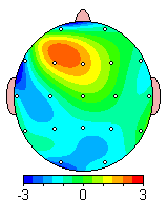


 “Practice makes perfect,” the saying goes. Optimal performance, however, can require more than talent, effort, and repetition. Training the brain to reduce stress through neurofeedback can remove barriers and enhance one’s innate abilities.


 Dr. Ron Swatzyna remembers Nov. 5, 2009, well. That day, Major Nidal Hassan opened fire at Fort Hood, killing 13 people and wounding dozens of others. But all Swatzyna could think about was what must have been going on inside Hassan’s mind